

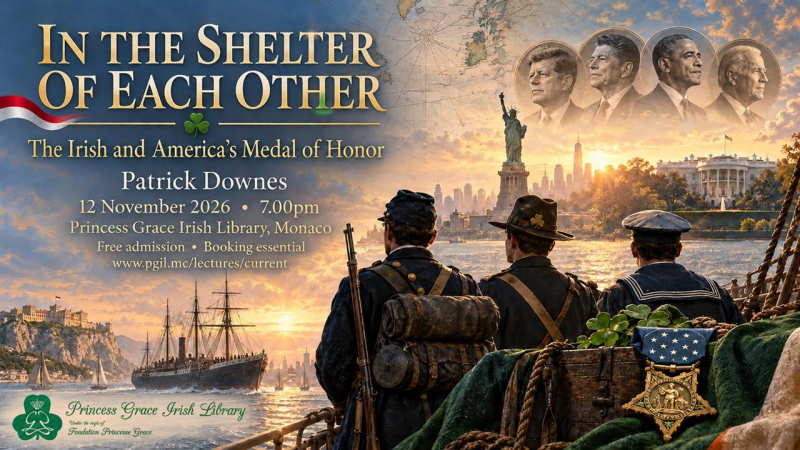
Ar scáth a chéile a mhaireann na daoine — “it is in the shelter of each other that the people live.” The old Irish proverb might stand over the story of the millions who left Ireland for America: a people who arrived poor, unwanted and caricatured, and who made their way by holding tight to one another — in the parish, the ward, the regiment and the ship’s company.
In this year of the 250th anniversary of the Declaration of Independence of America, this lecture turns to one of the most striking measures of what the Irish gave to their adopted country. More men born on the island of Ireland have received the Medal of Honor — America’s highest decoration for valour — than have been born in any other country on earth.
The Irish thread runs back to the founding itself: Commodore John Barry of Wexford, father of the American navy; John Dunlap of Strabane, who printed the Declaration; Charles Thomson of Derry, who signed it as Secretary of Congress. The medal roll carries that thread forward, from the lower decks of the Civil War navy to the mountains of Vietnam.
Drawing on his forthcoming book For Valour and Heritage: The Irish Story of America’s Medal of Honor, Patrick Downes asks who these men were, how they came to be in uniform, and what became of them afterwards — in the police forces, fire houses and civic institutions of the great American cities.
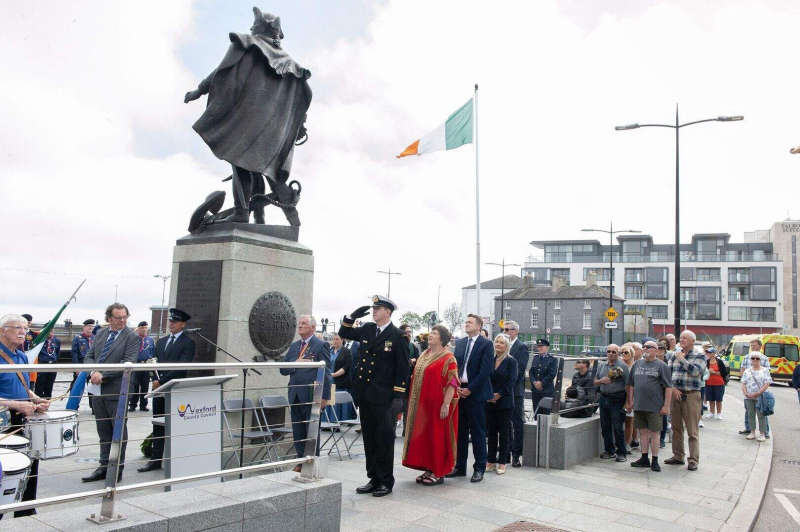
This year marked the 70th anniversary of the Unveiling at the Commodore John Barry Memorial Statue and the Maritime Memorial in the Crescent Quay in Wexford town in the south-east of Ireland. The statue pays tribute to one of Ireland's most famous sons and honours the town's long seafaring history. The national anthem of the United States of America was played to mark the Commodore's contribution to the US Navy.
John Barry (25 March 1745 – 13 September 1803) was an Irish-born American naval officer who has been credited by some as "The Father of the American Navy". He was appointed as a captain in the Continental Navy on December 7, 1775. Barry was the first captain placed in command of an American warship commissioned for service under the Continental flag. He is buried in Philadelphia.
Photo copyright: Jim Campbell
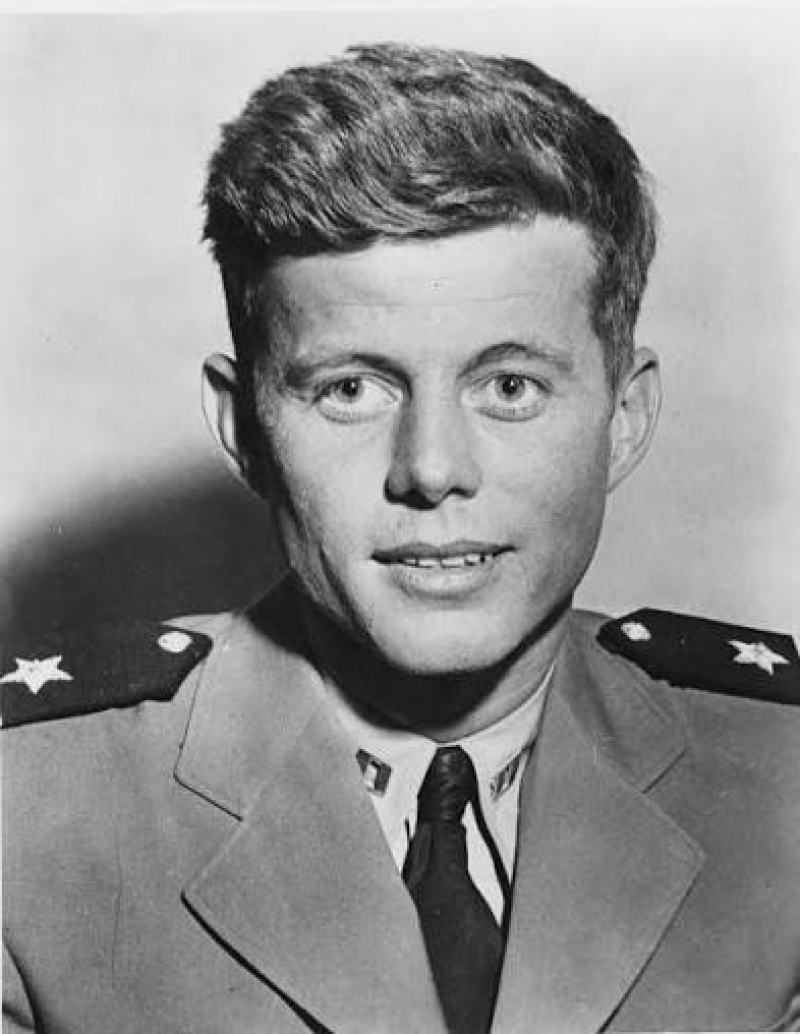
John F. Kennedy, the great-grandson of famine emigrants from county Wexford in Ireland went on to become the 35th president of the United States. He was the youngest person elected president, at 43 years and the first Catholic. Born into the prominent Kennedy family in Massachusetts, Kennedy graduated from Harvard University in 1940, joining the U.S. Naval Reserve the following year. During World War II, he commanded PT boats in the Pacific theater and he earned the Navy and Marine Corps Medal for his bravery.
***
Within a century of the mass emigration during the famine years (mid-1800s), the sons and grandsons of those emigrants had travelled further still. Lt. Audie Murphy, of Irish stock, came home from the Second World War the most decorated American soldier of his generation and perhaps ever and went on to Hollywood stardom. In June 1963 John F. Kennedy, great-grandson of Famine emigrants, stood before the Oireachtas in Dublin as a US President and returned to the Irish people a battle flag of the Irish Brigade, carried in the Civil War by the fighting 69th the very men this lecture describes.
And the line runs on into our own century: in the mountains of Afghanistan in June 2005, Lt Michael P. Murphy, a US Navy SEAL of Irish descent, left cover under fire to call for help for his surrounded team, and was awarded the Medal of Honor posthumously — the first sailor so honoured since Vietnam. It is a story of courage and of belonging, told with the record held close and the legend at arm’s length: for the Irish share of the medal has often been exaggerated, and an honest count, he argues, is more remarkable than the myth.
The subject finds a natural home at the Princess Grace Irish Library. The Library bears the name of a woman whose own family left County Mayo, and its collections preserve the world of the Wild Geese and of the Irish in France — among them the library of Count Gerald O’Kelly de Gallagh. It was from that same long scattering that the Irish of this story sailed to America.
Patrick Downes is a writer and speaker on military history. His mother was a Kelly and a cousin of Princess Grace née Kelly.